Deflection rate: the metric that matters
Evoriqa Team · June 18, 2026 · 5 min read
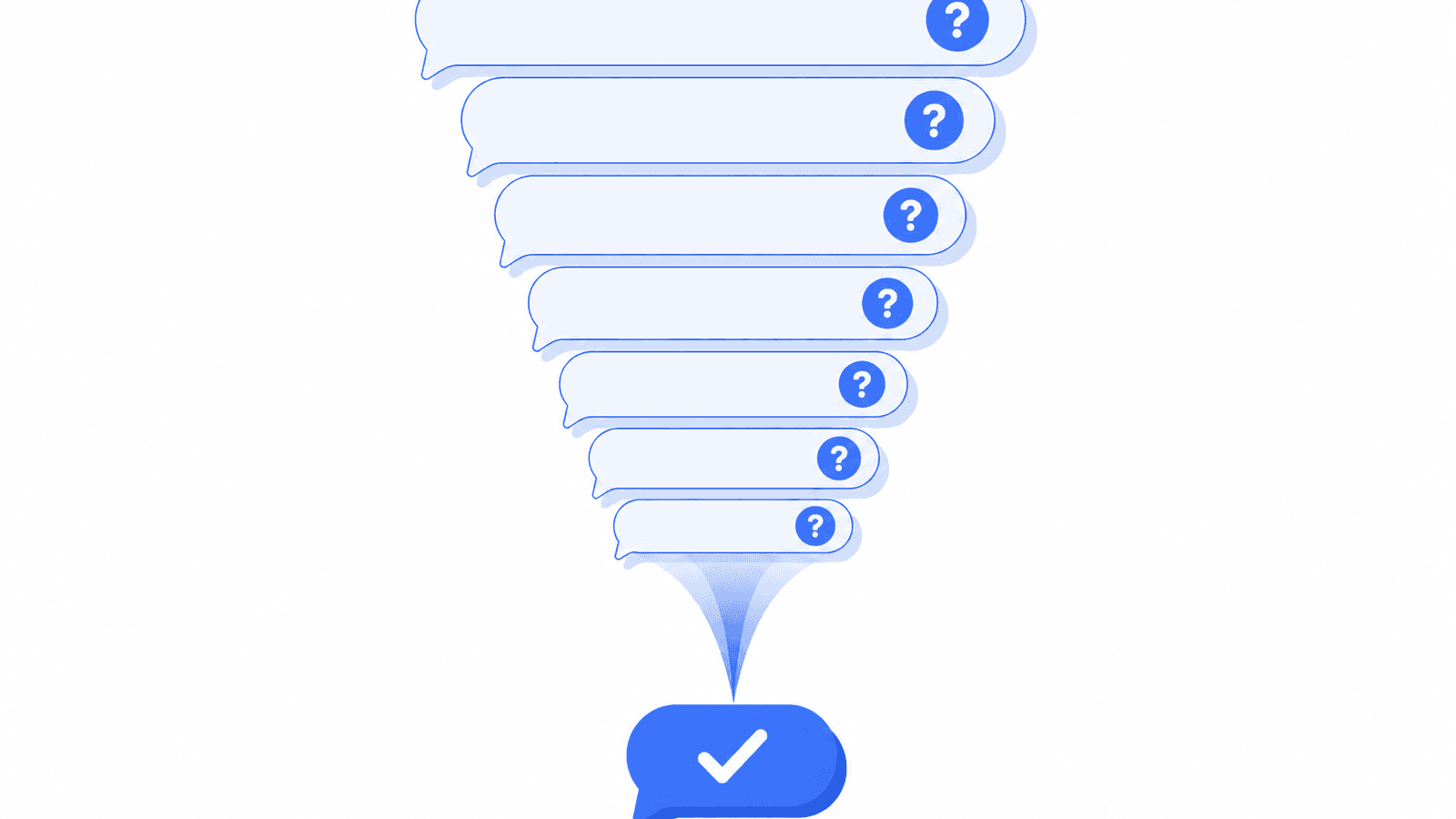
Most support dashboards are full of activity: tickets opened, average response time, messages sent. Those numbers are easy to collect, and they measure motion rather than outcomes. If you are paying for AI support, the question a finance team eventually asks is not how many messages moved, but how much of the work the AI actually took off your people. Deflection rate is the number that answers it. It is also one of the easiest numbers on the dashboard to fool yourself with.
This post is about measuring it honestly, not defining it. If you want the definitions, deflection rate and ticket deflection cover the formula and the terms. What follows is the practice: how to instrument the number, what it quietly hides, and how to read it so a good-looking figure is actually good news.
Fix the definition before you read the number
A deflection rate is a fraction, and both halves of it are choices you make. Before you trust any figure, write down two rules and stop changing them: what counts as a conversation, and what counts as a deflection.
- The denominator. Decide whether a two-second bounce, a stray page view, or a session that never reached the agent is a conversation at all. Whatever you decide, apply it every period.
- The numerator. Decide what evidence you require before calling a conversation deflected. "Did not create a ticket" is the loosest rule and the least honest. "The customer's intent was visibly resolved" is stricter and closer to the truth.
- The follow-up window. A conversation is not deflected if the same customer opens a ticket an hour later. Pick a window, say 24 or 72 hours, and count a conversation as deflected only if no human contact followed inside it.
The goal is not to find the one correct definition. There isn't one. The goal is to fix yours and leave it alone, because a deflection rate is only ever comparable to itself measured the same way. Redraw the denominator and you can move the rate several points without helping a single customer.
The failure the number hides
Deflection counts an absence: a conversation that ended without a human. It cannot tell the difference between a customer who was helped and a customer who gave up. Both leave without a handoff, and both get counted as a success.
That gap is the whole risk. A rising deflection rate can mean your agent is answering more questions, or it can mean more customers are hitting a wall and quitting, a false deflection that hides a failure and often returns as a second, angrier contact. You cannot see which is happening from the deflection number alone.
So never read it alone. Two companions do the checking:
- CSAT is the satisfaction check. When deflection climbs and the CSAT beside it drops across the same period, the extra conversations were not resolved: customers ran out of patience and got scored as successes anyway.
- Containment rate, read next to your repeat-contact rate, catches the customer who left and came back through another channel. A spike in repeat contacts just after "deflected" chats is the tell that the containment was hollow.
Read together, the three settle a question none of them answers by itself: did the AI resolve the conversation, or merely end it?
A worked example
The numbers below are invented to show the arithmetic. They are not Evoriqa results and describe no real deployment.
Say a month brings 10,000 conversations that reached your agent, and 6,500 of them ended without a human. On the loosest rule you report:
deflection = 6,500 / 10,000 = 65%Now apply the honest rules. Remove 1,200 sessions that ran under five seconds or never asked a question, because they were never real conversations and do not belong in the denominator. Of the chats you were counting as deflected, 700 were followed by a ticket or a repeat contact within 72 hours, so they were not resolved and leave the numerator:
conversations   = 10,000 - 1,200 = 8,800
real deflections =  6,500 -   700 = 5,800
deflection = 5,800 / 8,800 = 66%The headline barely moved, but its meaning changed. Now put a value on the honest figure. If each genuinely deflected conversation saves roughly eight minutes of agent handling, and a blended agent-minute costs $0.60:
5,800 x 8 min x $0.60 = $27,840 saved this monthThat last number is the one worth defending, because every input to it survived a definition you can explain out loud. The 65% headline was not so much wrong as unaccountable. The same raw data, counted two ways, gives you a figure you can stand behind or a figure you cannot.
A review cadence that keeps it honest
Instrument the number once, then read it on a schedule instead of watching a live counter.
- Weekly: track the deflection trend beside CSAT and repeat-contact rate. You are looking for divergence, deflection up while satisfaction is down, not for the absolute level.
- Monthly: break deflection down by topic. It runs high where your content is strong and collapses where there is a knowledge gap, so the by-topic view tells you exactly which answers to write next.
- Quarterly: re-examine the definition itself. If anyone widened the denominator or moved the follow-up window, your trend line just broke, and you want to know that before you compare one quarter to the last.
Improvement should always come from the same place: answering more questions correctly, so more conversations genuinely end resolved. If the rate rises for any other reason, a stricter path to a human, a broader exclusion in the denominator, you have moved the number, not the outcome.
Where Evoriqa fits
Every step above assumes you can hold one definition still and read deflection, CSAT, and repeat-contact rate on the same timeline. Evoriqa's analytics dashboard is arranged for that: the three sit together under a single fixed rule, so the weekly divergence check is a glance rather than a reconciliation across three tools that each drew the denominator differently. Knowledge-gap detection supplies the monthly by-topic read, ranking the subjects where the rate falls apart, which turns a sagging number into a list of answers to write rather than a prompt to quietly widen the denominator.